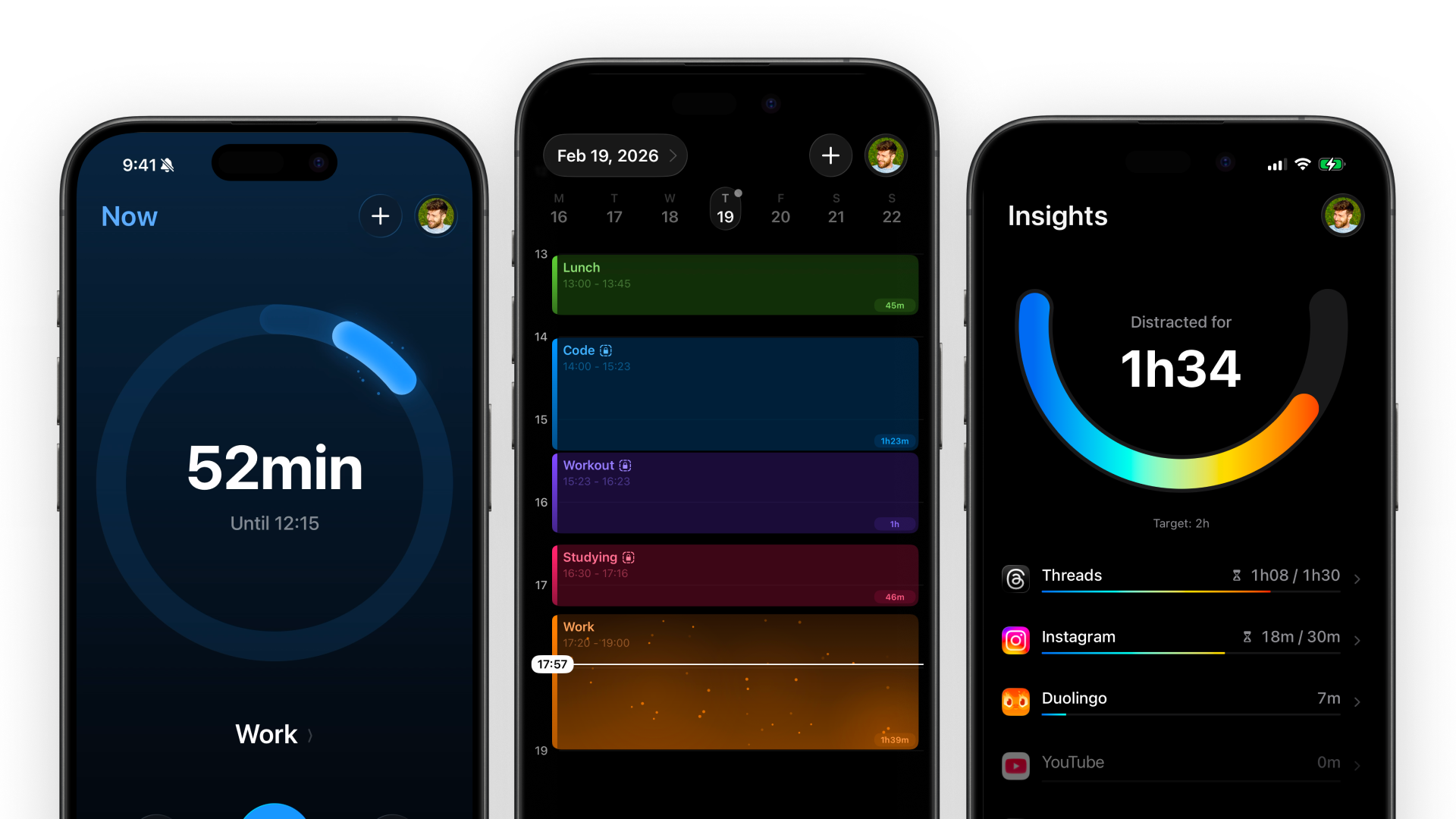
Most people treat distractions as an attention problem, when more often, it's a planning problem. When you don't have a clear idea of what you should be doing right now, your brain fills that gap with any easy and comfortable activity it can do instead. Our brain is wired to look for comfort instead of effort, and in this day and age, distractions are so plentiful and so easily accessible (aka in our pockets at all times) that they become our primary source of comfort when we don't have a clear plan to strive towards.
The discomfort where distraction lives
Think about the last time you got distracted (perhaps you even are right now). It never happens during something thrilling, does it? It happens when you're struggling, when you're bored, or when you have to do something that you really don't want to do. That sensation of discomfort is what makes distractions more and more tempting until the itch is too strong to resist. The solution? Time blocking.
What is time blocking?
Time blocking is simply the act of scheduling your day in advance, for both your professional and personal life. The idea is to make time for everything important in an honest and plausible way. So don't start scheduling 5am wake-up times and 6am cold plunges. This will most certainly lead to you giving up for good, believing you have no willpower, and going back to winging it.
So how do you start?
You don't need to overhaul your entire day, you need to start with one hour. Schedule a single block of time during your day and try to deeply focus on an activity during that time. Put your phone in another room, or use an app like Studious to automatically block distracting apps the moment your focus session starts to reduce temptation. Your goal isn't to be perfectly focused, it's just to show up in a distraction-free environment. Then make it a routine and focus on consistency before you start filling your calendar with more time blocks. If you do this, I'm sure you'll quickly find your groove and be able to do more with your time.
Florent, from the Studious team